
Revocation Requests
A Certificate Revocation List (CRL) is a list of digital certificates that have been revoked by the issuing Certificate Authority (CA) before their actual or assigned expiry date.
Certificate revocation is the process of terminating a certificate's validity before its expiry date. Certificates may be revoked for various reasons, as described below:
- Unspecified: Indicates that the certificate has been revoked for an unspecified reason.
- Affiliation Changed: Indicates that the certificate subject's affiliation or other relevant information has changed.
- Superseded: Indicates that the certificate has been replaced by a new certificate.
- Cease of Operation: Indicates that a server or computer has been decommissioned and the certificates issued to it are no longer required.
- Privilege Withdrawn: Indicates that the privileges granted to the certificate subject have been withdrawn.
- AA Compromise: Indicates that the private key associated with the Attribute Authority (AA) certificate is known or suspected to have been compromised.
- Key Compromise: Indicates that the certificate subject's private key is known or suspected to have been compromised.
- CA Compromise: Indicates that the private key associated with the CA certificate is known or suspected to have been compromised.
- Certificate Hold: Indicates that the certificate has been temporarily suspended. One of the following hold instructions must be provided:
- id-holdinstruction-none
- id-holdinstruction-callissuer
- id-holdinstruction-reject
ADSS Web RA supports the following types of TLS certificates:
- EV TLS Server Authentication
- TLS Client Authentication
- TLS Server Authentication
When an EV TLS Server Authentication certificate is revoked, ADSS Web RA supports only the following six revocation reasons:
- Unspecified
- Key Compromise
- Affiliation Changed
- Superseded
- Cease of Operation
- Privilege Withdrawn
|
|
Note:
|

How to Revoke a Certificate
Expand Requests > Revocation Requests from the left-tree menu in the Admin portal. The revocation requests listing screen will appear.
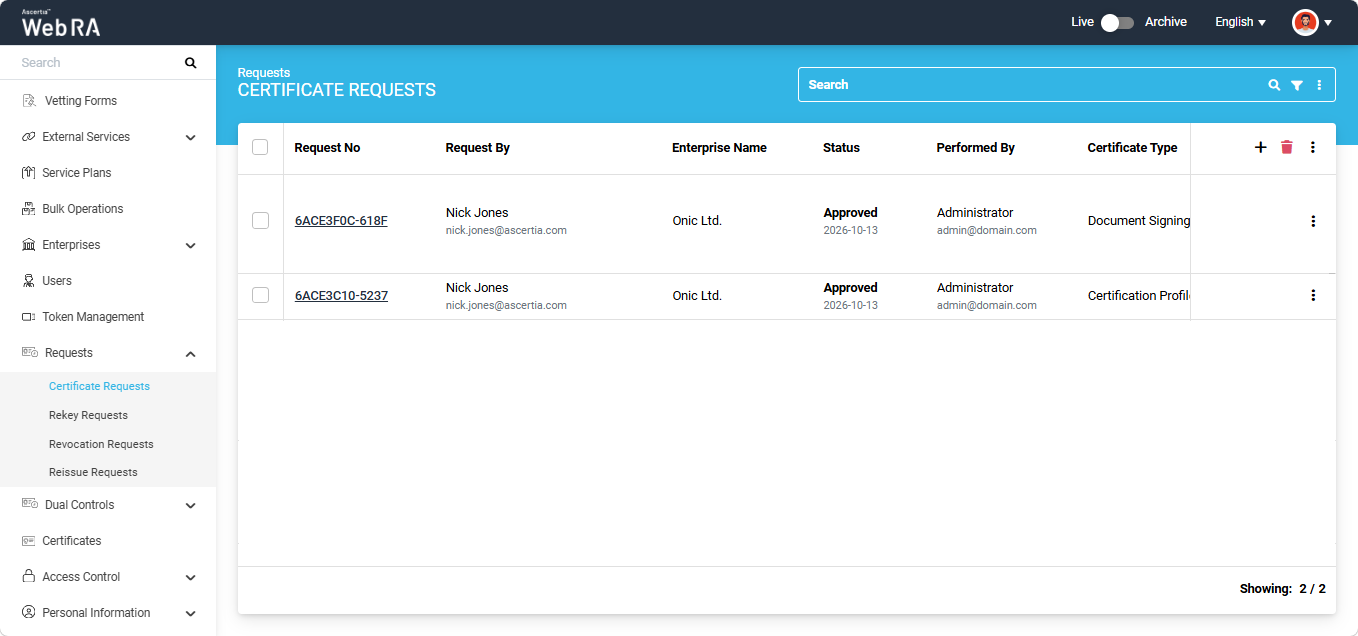
Click the request number of the certificate that you want to revoke. Alternatively, click the three-dot button next to the certificate request entry and select the 'View Request' option.
The system will then open the certificate request in View mode.
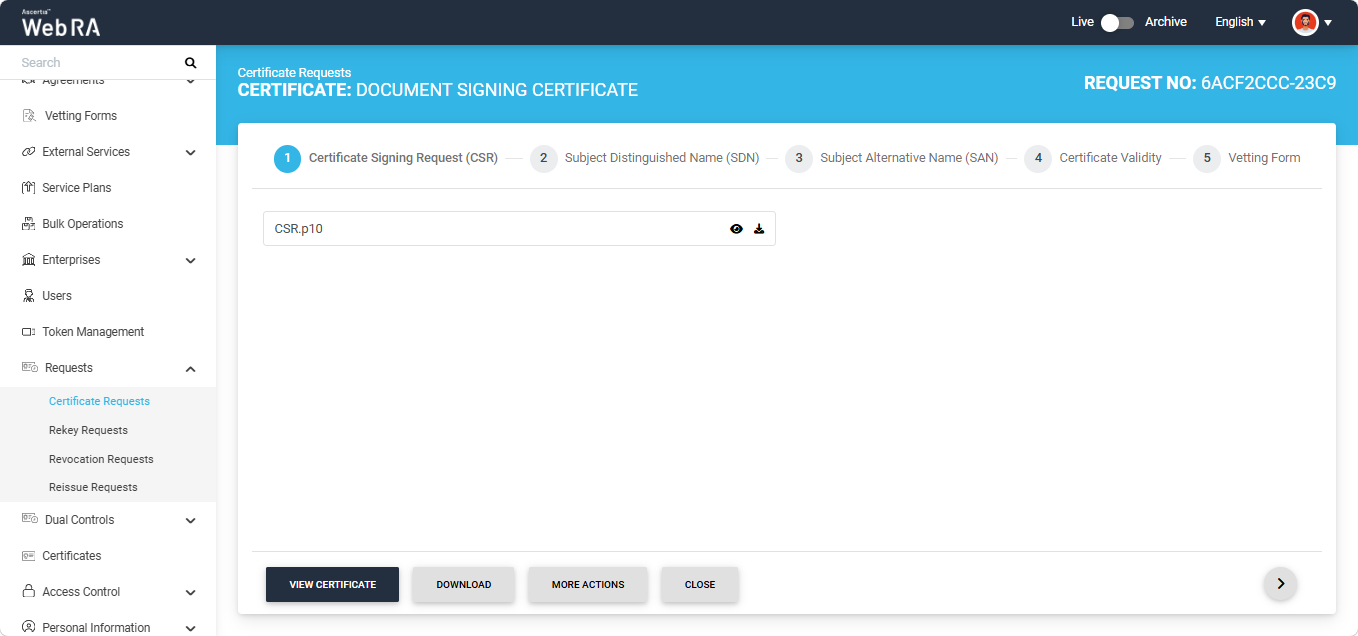
To revoke the certificate, click the 'More Actions' button. A dialog titled 'Certificate Action' will appear on the screen.
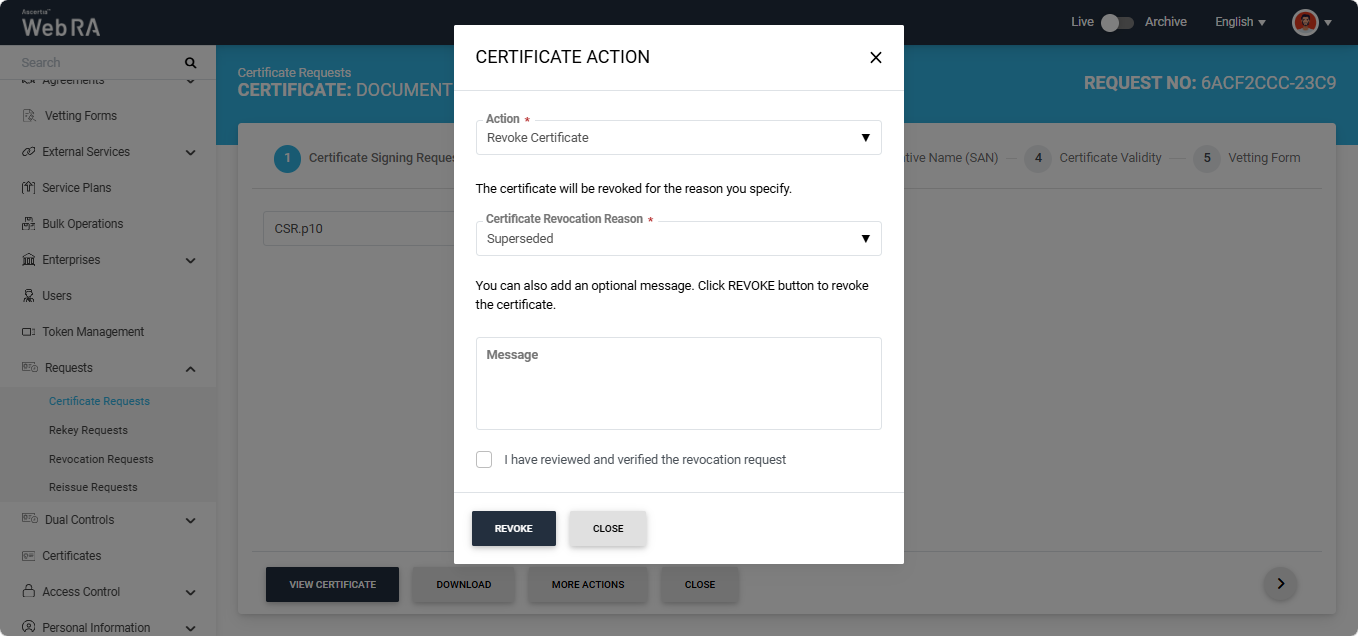
By default, ‘Revoke Certificate’ option will be selected in the ‘Action’ dropdown.
Select the revocation reason from the ‘Certificate Revocation Reason’ dropdown. After selecting the required option, select the 'I have renewed and verified the revocation request' checkbox and click the ‘Revoke' button.
The certificate will be revoked and a ‘Certificate Revoked’ success alert will appear on the screen.
How to Approve a Revocation Request
Expand Requests > Revocation Requests from the left-tree menu in the Admin Portal. The system displays the ‘Revocation Requests’ listing screen.
Note: Revocation requests submitted through the Web Portal appear on this screen for approval only if vetting is enabled in the associated certification profile.
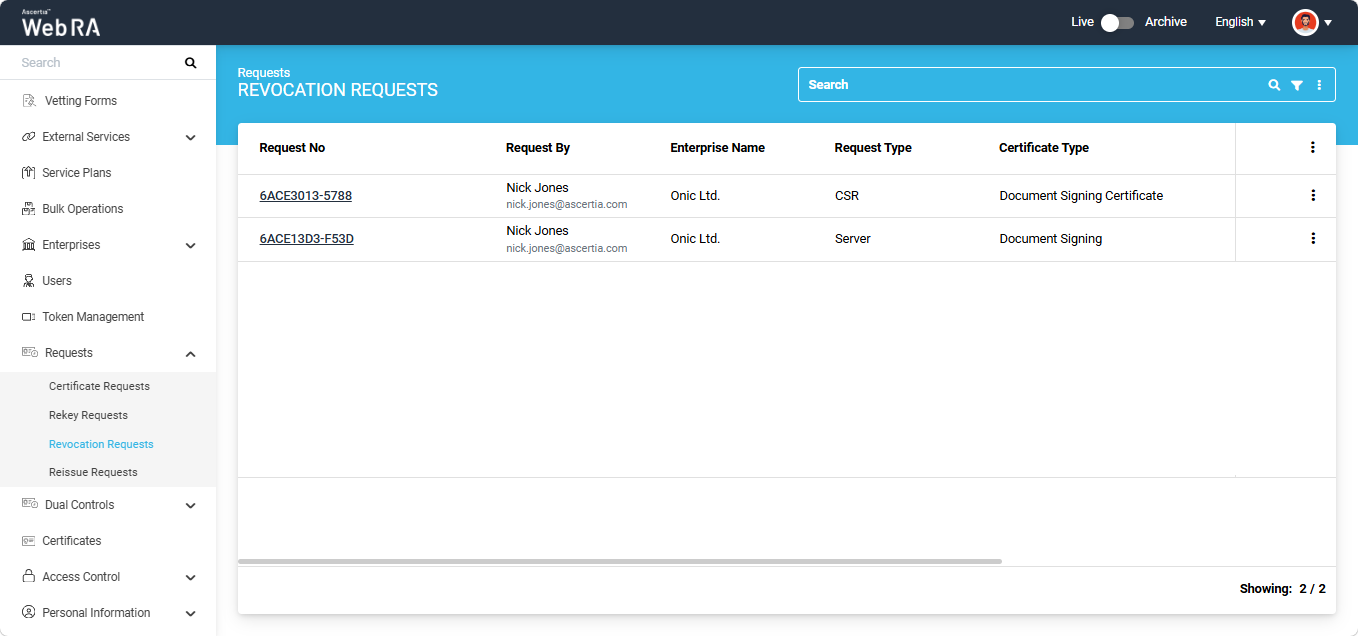
Click the three-dot  button next to the revocation request that you want to approve and select ‘View Request’. The system will open the Revocation Request.
Alternatively, you can click the Request No. of the revocation request to access it.
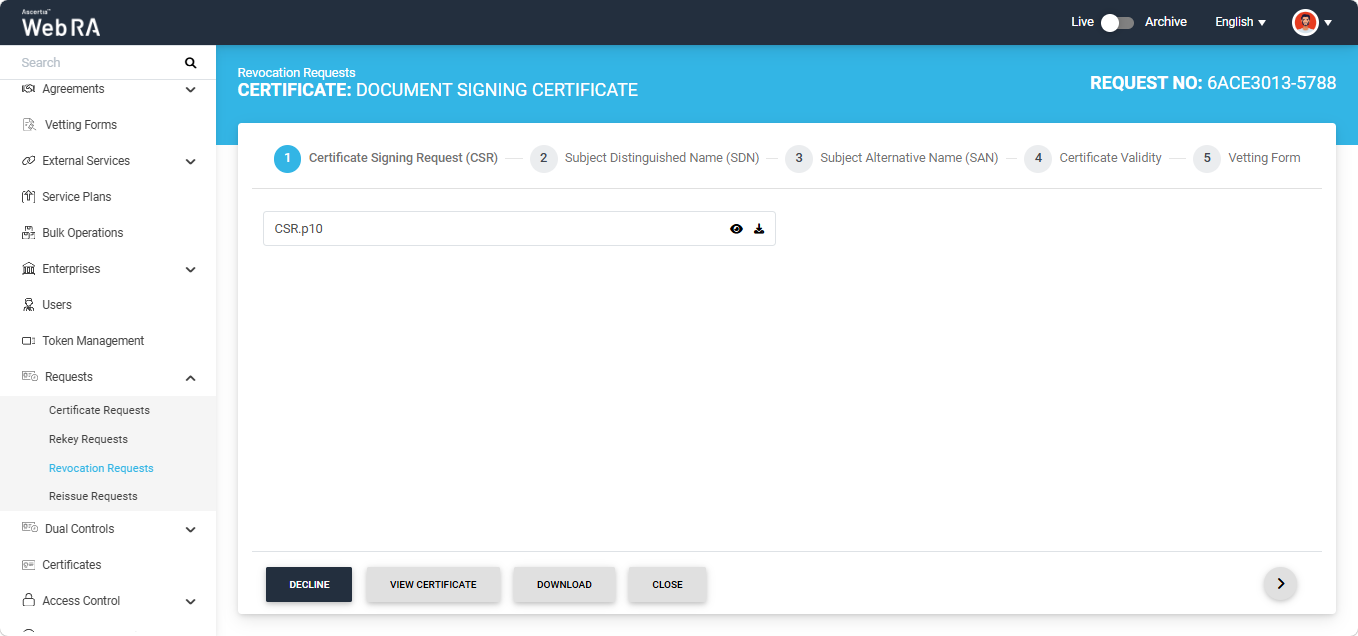
|
|
Note: If the “Vertical Certificate Request Layout for Operators policy” is enabled in the Configurations > Policies > Requests section, the reissue request details will be displayed in a vertical layout to the operator. All sections will appear on a single page, allowing the operator to view the complete information by scrolling up and down. Once the operator approves the revocation request, the request continues to appear in the vertical layout on the current screen. However, if the operator closes the approved request and opens it again, the request is displayed using the default layout settings. |
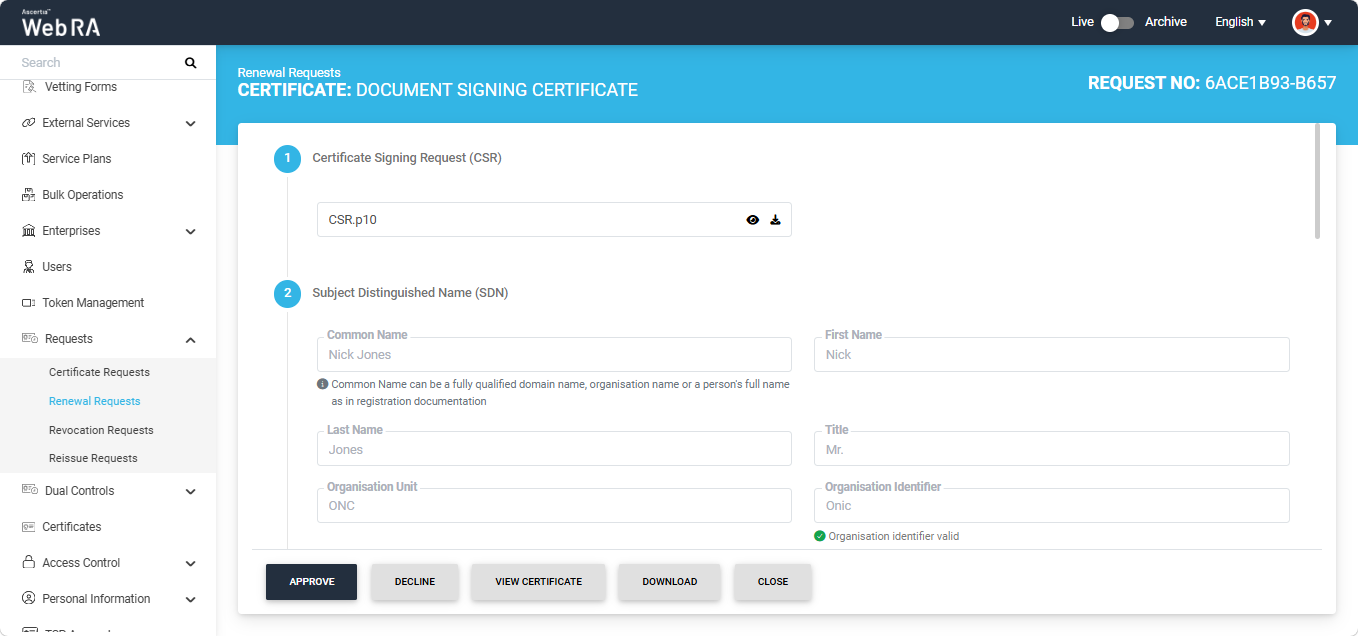
Navigate to the last tab of the revocation request by clicking the next ‘>’ button. Then, click ‘Approve’ button.
The system will display the ‘Certificate Revoke’ dialog on the screen.
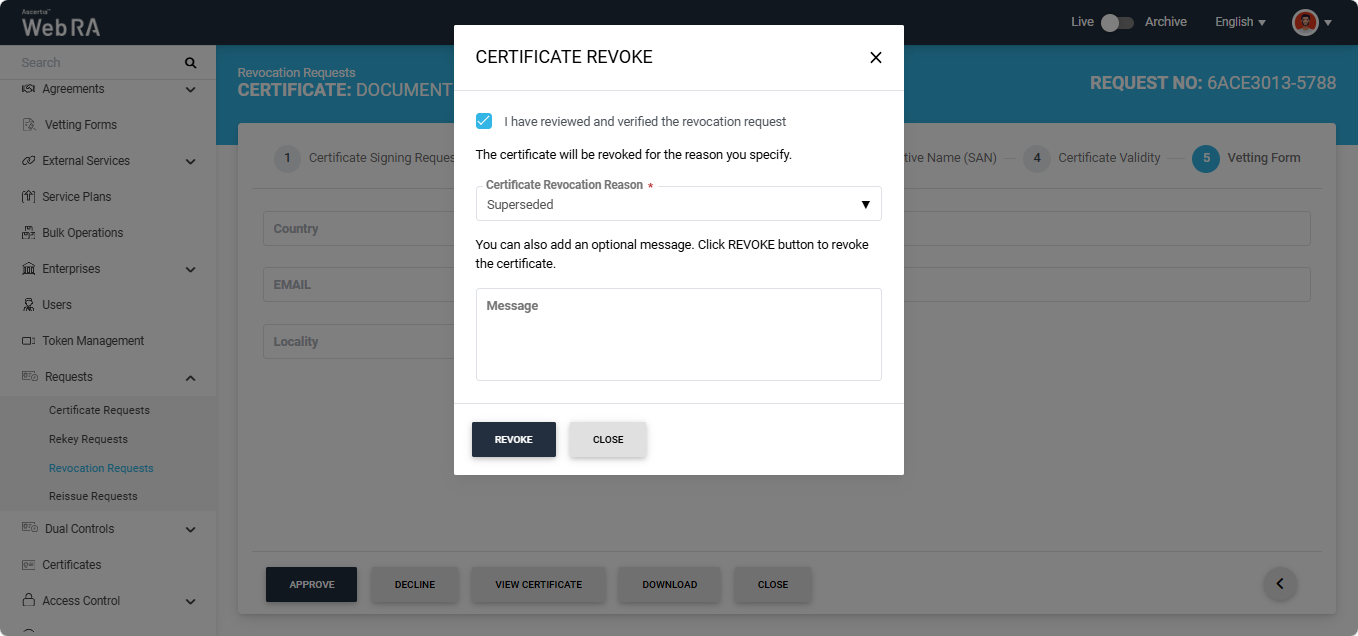
Select the ‘I have reviewed and verified the revocation request’ checkbox. Then, select the revocation reason from the ‘Certificate Revocation Reason’ dropdown.
You can also add an optional message related to the renewal request in the Message box.
After selecting the required options, click the ‘Revoke’ button. The certificate will be revoked and a success alert will appear on the screen.
|
|
Note: If dual control is enabled for the Requests module, the revocation request is forwarded to the dual control operator for review after the operator approves it.. |
How to Approve a Reinstate Certificate Request
Expand Requests > Revocation Requests from the left-tree menu in the Admin Portal. The system displays the ‘Revocation Requests’ listing screen.
Note: Reinstate requests submitted through the Web Portal appear on this screen for approval only if vetting is enabled in the associated certification profile.
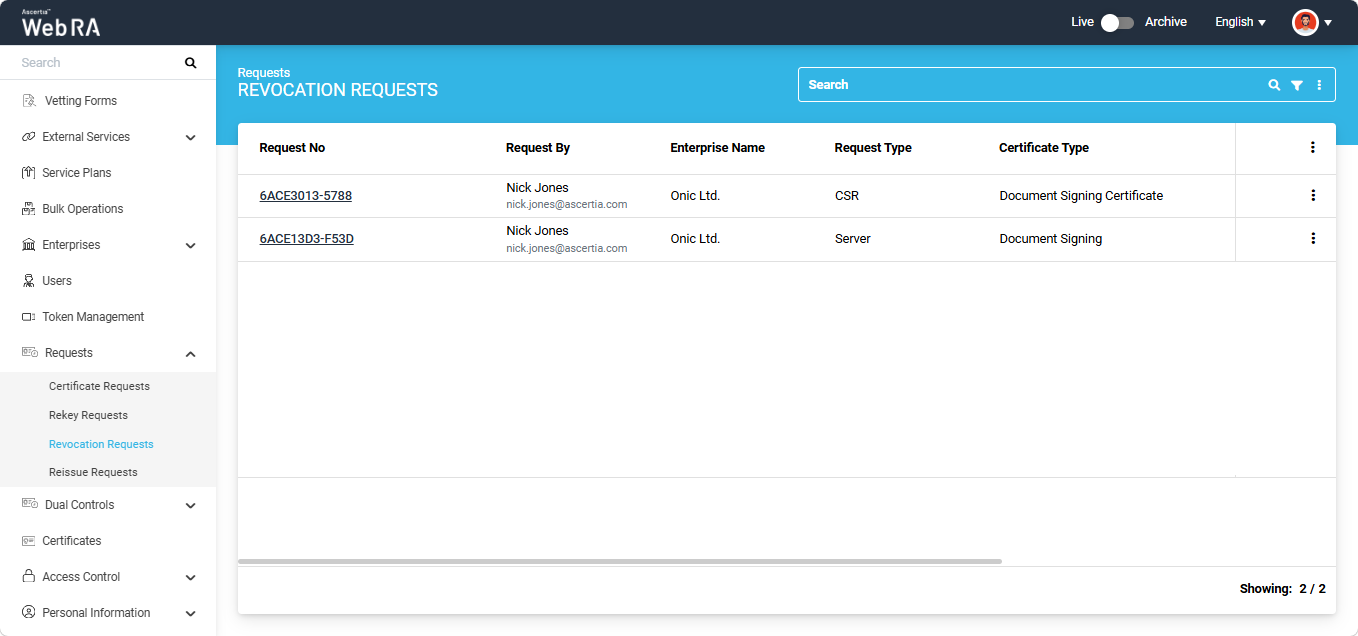
Click the three-dot  button next to the reinstate request that you want to approve and select ‘View Request’. The system will open the reinstate request.
Alternatively, you can click the Request No. of the revocation request to access it.
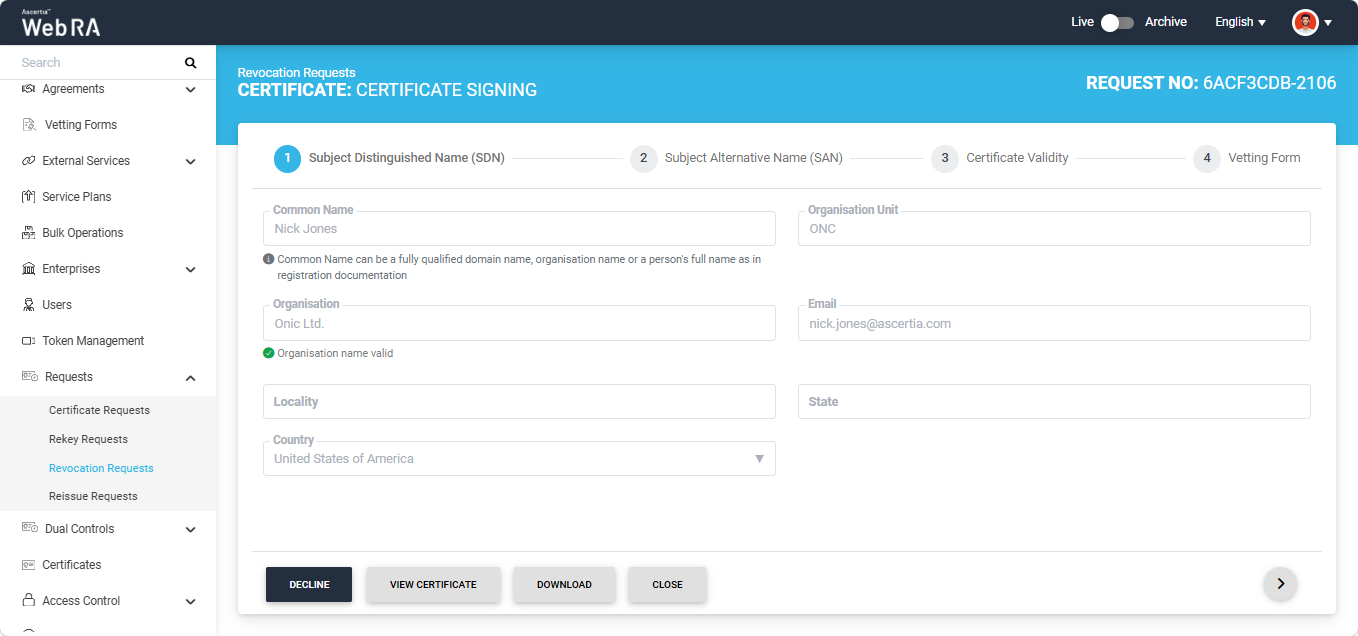
Navigate to the last tab of the reinstate request by clicking the next ‘>’ button. Then, click the ‘Approve’ button.
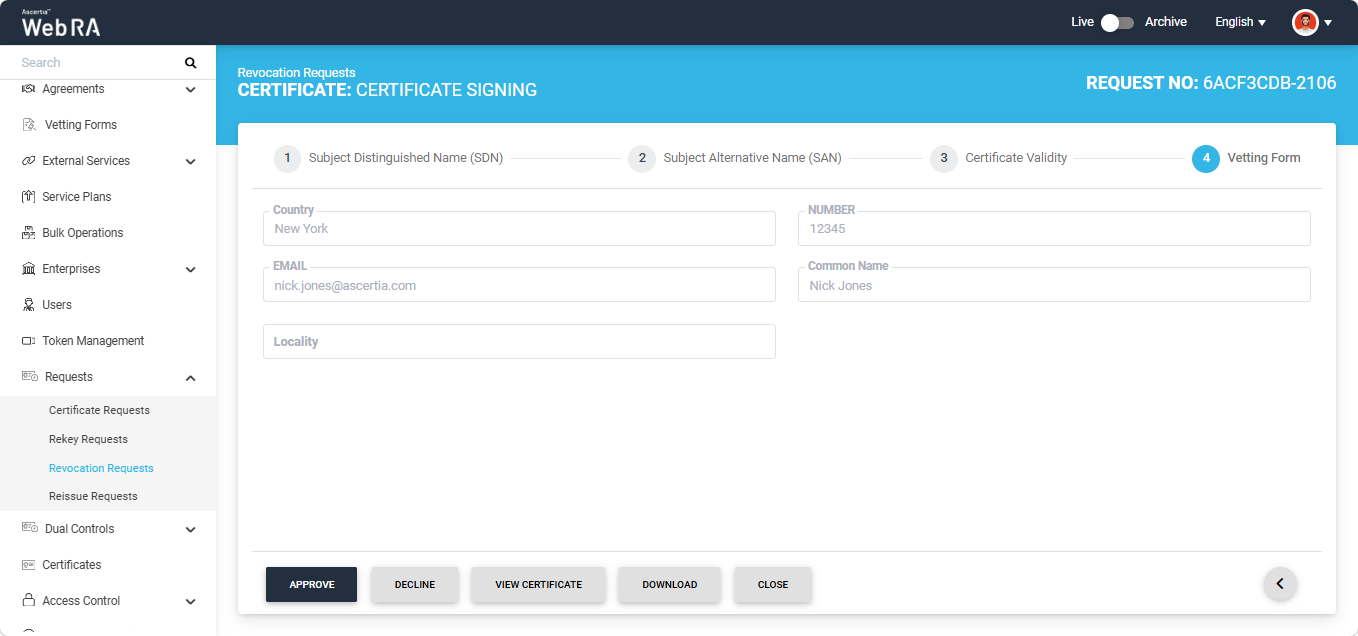
The system will display the ‘Certificate Reinstate’ dialog on the screen.
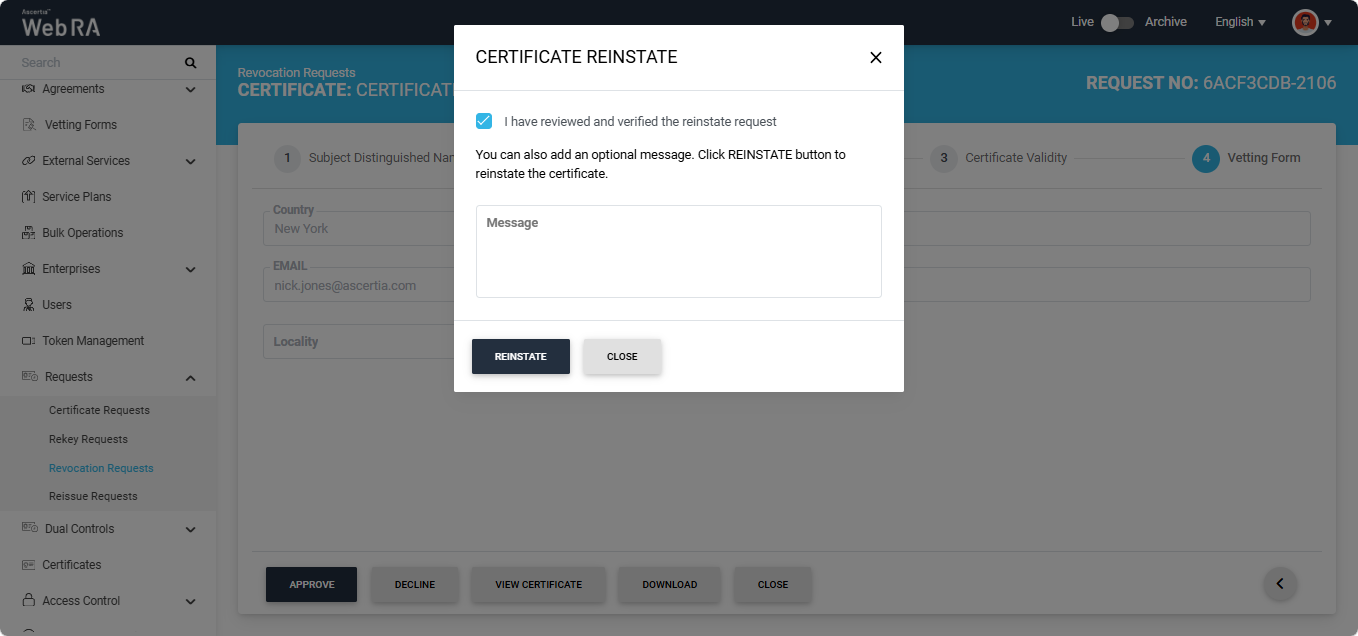
Select the ‘I have reviewed and verified the reinstate request’ checkbox. You can also add an optional message related to the reinstate request in the Message box.
Click the ‘Reinstate’ button to reinstate the certificate. The certificate will be reinstated and a success alert will appear on the screen.
Second Factor Authentication
If second factor authentication is enabled on certificate requests, the configured authentication mechanism will function accordingly. When a user clicks on the Generate button, the authentication window will appear, and once it accepts the selected method, it will generate a certificate.
The authentication mechanism can be one of the following:
- SMS OTP Authentication
- Email OTP Authentication
- Email & SMS Authentication
- SAML Authentication
- Active Directory Authentication
- Azure Active Directory Authentication
- OIDC Authentication